
Supporting New Mothers Experiencing Postpartum Hair Loss – Expert Commentary


Area
Thinning Hair & Hair LossNoticing more hair in the shower drain or hairbrush since having your baby? You’re not imagining it, and you’re far from alone. In this expert commentary, Amit Saha, Registered Pharmacist and Head of Technical & Innovation at Dermal Therapy, explains why postpartum hair shedding happens, why it’s almost always temporary, and how the right support can help new mothers through this distressing but normal stage.
Key Takeaways
- A Normal, Temporary Stage: Postpartum hair shedding is medically known as telogen effluvium and is driven by the natural drop in hormone levels after childbirth. In most cases it resolves on its own without medical treatment.
- It’s Hormonal, Not Permanent: As oestrogen returns to pre-pregnancy levels, a greater number of hair follicles enter the shedding phase of the growth cycle, which is why hair loss can feel sudden and alarming.
- Support Makes a Difference: A nutritious diet, addressing nutritional deficiencies, gentle styling and products that nourish the scalp and support the hair growth cycle can all help new mothers manage this stage with reassurance.
What is postpartum hair loss?
Hair shedding is a common concern among women in the months following childbirth. Known medically as telogen effluvium, this temporary condition occurs as hormonal levels particularly estrogen, return to their pre-pregnancy state, causing a greater number of hair follicles to enter the shedding phase of the hair growth cycle.
How can new mothers manage it?
In most instances, postpartum hair loss resolves on its own without the need for medical treatment. While you wait for your hair to return to normal, there are several practical things you can do to support your hair health: maintaining a nutritious diet, addressing any nutritional deficiencies, minimising excessive heat styling, and choosing products that add volume and improve the appearance of fuller hair.
If your hair loss feels severe or prolonged, it’s always worth speaking to your pharmacist or GP for reassurance and advice.
What additional support is available?
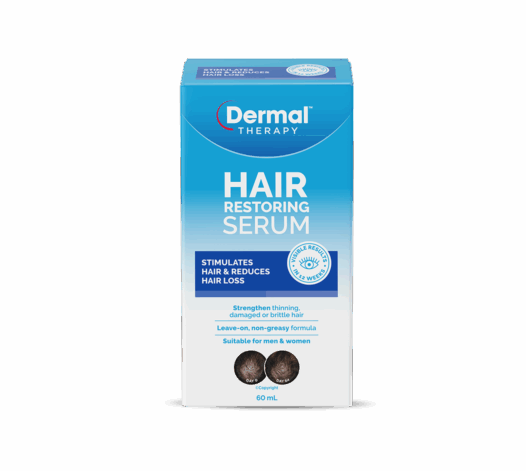
If you’re looking for extra support, hair restoration formulations such as the Dermal Therapy Hair Restoring range offer new options. These products are designed to nourish the scalp, strengthen existing hair and encourage healthier hair by helping optimise the hair growth cycle. While postpartum hair loss is usually temporary, it can be a distressing stage – so if you have any concerns, your pharmacist or GP is always there to offer guidance and reassurance.
Dermal Therapy Hair Restoring Range
For new mothers seeking additional support, the Dermal Therapy Hair Restoring range is formulated to nourish the scalp, strengthen existing hair and help optimise the hair production cycle.
Dermal Therapy Hair Restoring Serum
- Backed by Science: Formulated with two clinically tested active complexes designed to help reduce hair loss and stimulate hair, with efficacy confirmed by trial.
- Dual Active Complex: Contains a Vitamin B-complex and essential elements – key hair nutrients – plus Redensyl™, a hair-stimulating ingredient that targets hair at the cellular level.
- Easy to Use: A leave-on, non-greasy serum applied daily to the scalp, with visible results in 12 weeks.
Dermal Therapy Hair Restoring Shampoo & Conditioner
- Advanced Caffeine Formula: A 2-in-1 formula with caffeine to stimulate hair, helping strengthen thinning, damaged or brittle hair.
- Gentle Daily Cleanser: Free from soap and SLS, making it easy to integrate into a daily routine.
- Nourishing Nutrients: Contains Vitamin B-complex and essential elements to support hair follicle balance.
For best results, the Serum and the Shampoo & Conditioner are designed to be used together as a complete hair restoring system.
Relevant articles
- Rounding up the Benefits of a Regular Scalp Care Routine
- Postpartum Hair Loss: Causes, Treatment & What to Expect
- The Role of Scalp Health & Circulation in Hair Regrowth
FAQs for New Mothers Experiencing Postpartum Hair Loss
For extra support, hair restoration formulations such as the Dermal Therapy Hair Restoring range are designed to nourish the scalp, strengthen existing hair and help optimise the hair growth cycle. The Hair Restoring Serum and Hair Restoring Shampoo & Conditioner are designed to be used together for best results.
Avoid harsh products and excessive heat styling, and be gentle when brushing wet hair. A gentle, nourishing option like the Dermal Therapy Hair Restoring Shampoo & Conditioner – which is free from soap and SLS – cleanses the scalp while supporting hair health, and is suitable for daily use.