
Sunscreen for Acne-Prone Skin: Why It’s Essential in Your Daily Routine



Area
Daily UseKey Takeaways:
- Sunscreen is a key part of acne care: It’s easy to overlook, but it should be a daily step.
- Acne-prone skin can be extra sun-sensitive: This is especially true when you’re using acne treatments with strong actives.
- UV can make things worse: It can contribute to the inflammation cycle, and make post-acne pigmentation more persistent and noticeable.
- Texture matters: The right sunscreen protects well without feeling heavy or greasy, or contributing to blocked pores.
- Comfort builds the habit: A sunscreen you enjoy wearing is one you’ll actually use every day.
If you’re managing breakouts, sunscreen can feel like one more product to add. Many people skip it, especially after a bad experience with a heavy formula.
Amit Saha, Registered Pharmacist and Head of Technical & Innovation at Dermal Therapy, explains why that’s worth rethinking. Here’s why sunscreen belongs in your acne routine and what to look for in one.
Is sunscreen really essential for acne-prone skin?
When managing acne, sunscreen is often an afterthought. According to Amit, it should be an essential part of your daily routine.
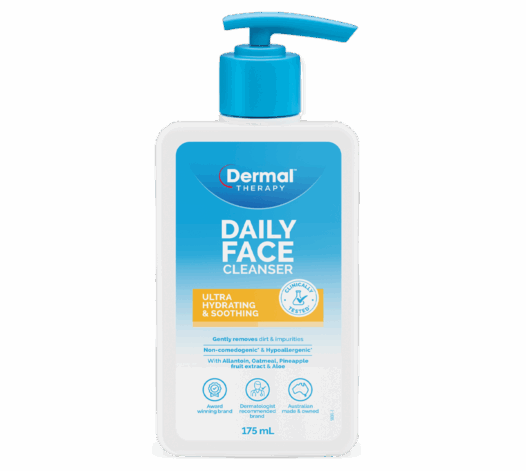
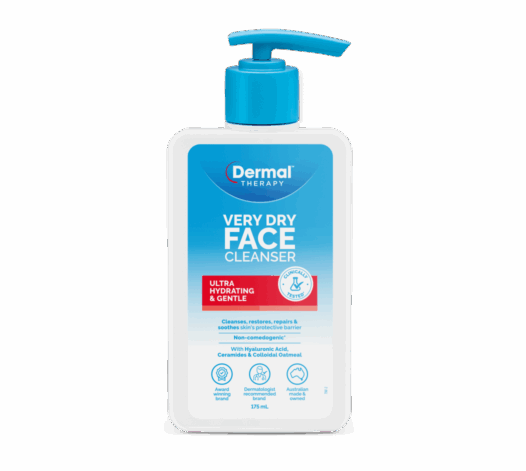
Acne-prone skin can be sensitive and easily irritated, particularly when you’re using acne treatments with strong actives. If you’re building a routine around the right cleanser for acne-prone skin, sunscreen is the step that helps protect that skin during the day.
UV exposure can also contribute to inflammation and make post-acne pigmentation more persistent and noticeable. It can dry out the skin too, which may prompt it to produce more oil (sebum) to compensate, and that extra oil can make breakouts more likely. That’s one reason Amit’s more holistic approach to acne treatment includes protecting your skin as well as treating it.
What makes a good sunscreen for acne-prone skin?
The challenge is finding a sunscreen that provides high-level protection without feeling heavy, greasy or contributing to blocked pores. It also needs to be comfortable on your skin. The more comfortable it is, the more likely it is to become part of your daily routine.
That fits with the idea of acne control that works with your skin, not against it. A sunscreen shouldn’t undo the good work your other products are doing.
Which Dermal Therapy sunscreen is made for acne-prone skin?
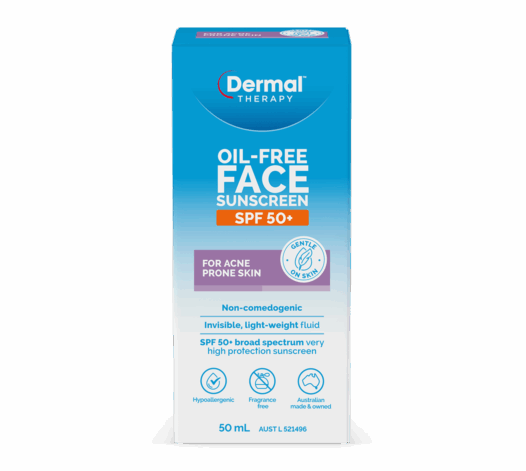
Dermal Therapy recently introduced Oil-Free Face Sunscreen SPF 50+, designed for acne-prone and oily skin.
- Very high protection: SPF 50+ that aids in the prevention of solar keratosis.
- Lightweight and oil-free: A non-comedogenic fluid that won’t block pores.
- Quick-absorbing: No white cast or greasy residue.
- Acnesium® and Sebocytine®: These support a smooth complexion and help manage excess oiliness and breakouts.
- Gentle on skin: Fragrance-free, hypoallergenic and Australian made.
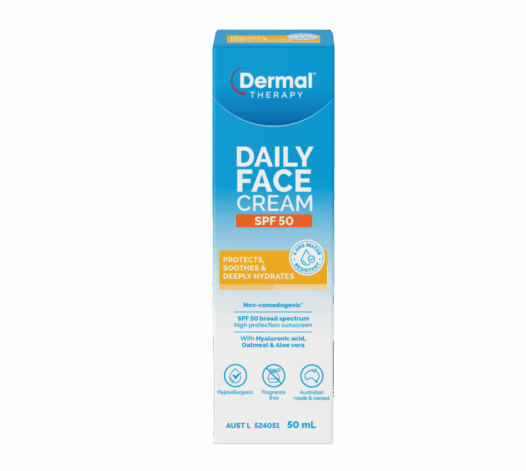
Prefer a moisturiser and sunscreen in one step? Daily Face Cream SPF 50 is a moisturising, water resistant sunscreen with high, broad spectrum protection.
- Hydrating and soothing: Enriched with hyaluronic acid, oatmeal and aloe vera to support the skin barrier.
- Water resistant: A 4 hours water resistant formula with a non-greasy finish.
- Made for sensitive skin: Hypoallergenic and non-comedogenic.
Don’t forget your lips. Lip Balm SPF 50+ is a dermatologist recommended lip balm that soothes and shields dry, chapped lips with no greasy feel or bitter aftertaste. It is also available in a wind-up stick format.
What else can support your acne routine?
Sunscreen works best alongside the rest of your skincare. Dermal Therapy’s acne range is designed to work together as a simple routine.
- Acne Control Wash: A gentle foaming cleanser that controls excess oil with Seboclear™ and helps maintain your skin’s natural microbiome. It’s free from Salicylic Acid, peroxides, soap and SLS.
- Acne Control Lotion: Hydrates with Hyaluronic Acid and Aloe Vera while keeping skin’s microbiome balanced.
- Acne Spot Cream: Only needed when breakouts or flare-ups occur. It uses triple AHA technology to gently unclog pores and has an anti-scar formula.
- Acne Control Clear Patch: Hydrocolloid patches you can wear discreetly day or night, with visible results in just 4 hours.
Where to from here?
Sunscreen doesn’t need to work against your acne routine. A lightweight, non-comedogenic formula you’re happy to wear every day helps protect skin that’s already working hard. You can find more guidance in our Knowledge Hub.
When should you see your doctor?
See your GP or pharmacist if your acne is severe, painful, scarring or not improving. Seek advice too if you notice a new or changing mark on your skin, or if a product irritates your skin.
References
- Cancer Council Australia. Sunscreen.
- Better Health Channel (Victoria). Acne.
- Australasian College of Dermatologists. Acne.
FAQs for Sunscreen for Acne-Prone Skin